
Is My Dog Sleeping Too Much?
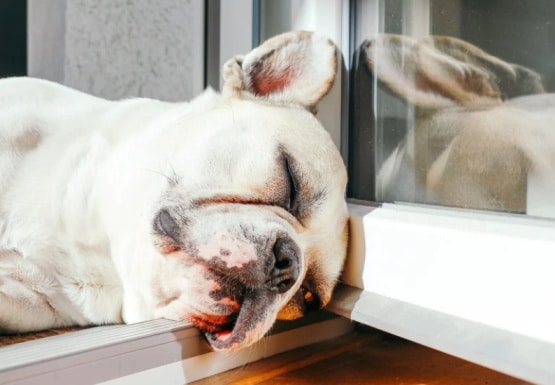
For the past couple of months, many of us have been spending more time at home than in the past due to the health pandemic. Because of this, many of us are paying more attention to our pets' behavior — noticing their patterns and habits because we are spending more time together. Many people are noticing their dogs sleeping and wondering if the amount of sleep is normal. Healthy people tend to sleep 7 to 8 hours a night. Dogs, on the other hand, require much more sleep to stay healthy.
Typically, on average, dogs sleep 12 to 14 hours per 24-hour day, with a little over half of their time spent dozing. Puppies and older dogs tend to sleep more, up to 18 to 20 hours a day. The amount of time a dog sleeps will vary by breed and by individual dog. Scientists and veterinarians are not exactly sure why dogs sleep this much. One theory is that dogs do not sleep deeply and therefore require more time at rest. Most dogs are easily roused at the sound of the mail truck or other exciting sounds.
Most dogs can't get "too much" sleep, but if you are worried your dog is sleeping too much or acting lethargic, there are a few things you can do. Here are some things to take into consideration first:
Make sure your dog is drinking the usual amount of water. Monitor how much your dog drinks. If you notice your pooch is not drinking as much as usual, or is thirstier than normal, there may be a reason. Dogs need to drink water daily to avoid dehydration. If your dog is not drinking, there could be a health reason, as certain health issues can cause a dog's thirst to fluctuate. In some cases, illnesses such as diabetes and kidney disease may cause a dog's appetite for water to change. Also, fear, negative experiences, or moving the water dish may affect drinking behavior.
In some cases, switching up your dog's food can affect his or her energy level. If you have switched foods, the ingredients may have caused your pet to sleep more or even less. Also, a sudden change in activity level can cause sleep behavior changes. For example, perhaps previously you were not taking walks as often, and now that you are home more, exercise may have increased. This could explain an increase in sleeping.
Boredom or depression may be a cause of an increase in sleep, too. Ensure you are meeting your pet's daily exercise needs. Spend time working on training and play some brain games. If you have to leave your dog alone for periods of time, allow them space to roam in the house and leave toys for them to play with.
When to Get Help
It is not unusual for your dog to spend most of the day asleep or resting. That said, too much sleep can still be a sign of problems with your dog's health. If you do think your dog is sleeping too much, the best thing to do is make an appointment with your vet to get it checked out. Explain your concerns and ask for a complete physical health checkup. Consider seeing your vet if:
- Your dog's sleep patterns have changed.
- Your dog sleeps even when there's "something better to do," especially if that thing would usually grab their attention.
- Your dog's sleeping is interfering with eating or drinking.
- It's hard to wake your dog.
- Your dog falls asleep suddenly, even in the middle of playing.
- Your dog is waking up suddenly in a state of fright or distress.
- The increase in sleep comes with other physical symptoms, such as limping or unwillingness to walk, run, or jump, or an increase or decrease in eating or the need to urinate/defecate.
- The increase in sleep comes with other unusual behavior, such as staring at corners or walls, an increase in aggression or fearfulness, or pacing, drooling, and other signs of anxiety.
About FlexPet: FlexPet is a joint supplement for dogs built around CM8® (cetyl myristoleate) — made in the USA and trusted since 1999. See what makes CM8® different →